Matisse in the Americas: Recent Developments in Matisse Studies
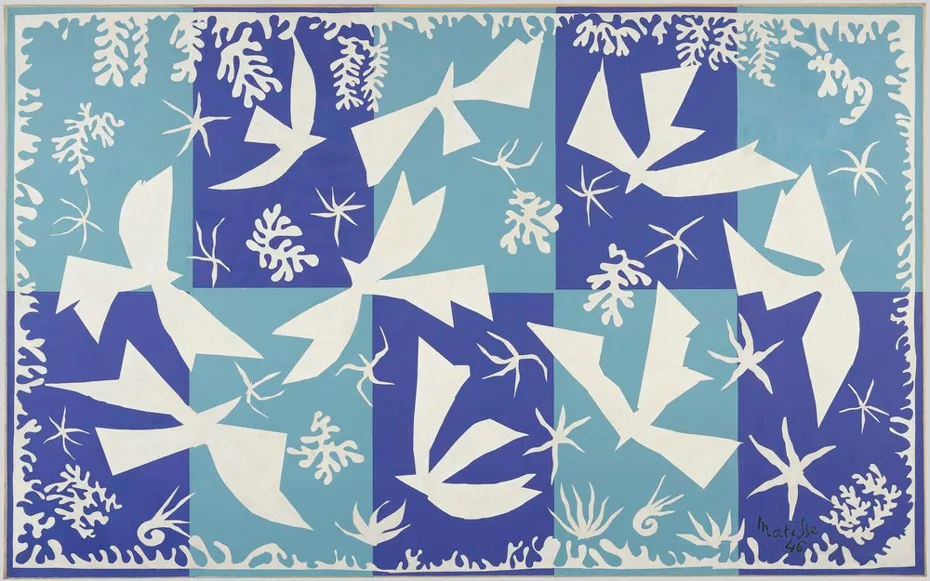
Panel discussion with Matthew Affron, Ellen McBreen, and Denise Murrell, moderated by Victor Sainsot
In March 2026, several major exhibitions – at the Grand Palais in Paris and at the Baltimore Museum of Art – renew attention to the work of Henri Matisse. These exhibitions provide an opportunity to reconsider current Matisse scholarship in the United States and to explore the artist’s complex relationship with the American continent.
In early 1930, Matisse crossed the Atlantic and arrived in New York – the first step in a transformative artistic journey that would lead him to the West Coast, to Tahiti, and then to the West Indies. Who were the interlocutors (curators, collectors, models), the stopovers, and the landscapes that shaped his voyage? To what extent did these American motifs influence his artistic practice both during his travels and upon his return to France? This discussion aims to move beyond the anecdotal dimension of the journey to examine the symbolic and aesthetic significance of Matisse’s transatlantic experience, with particular attention to the Martinican episode, often overlooked in art-historical narratives. Exploring the encounter between Matisse’s Western gaze and a world already marked by circulation, hybridity, and resistance allows us to re-situate his works within an expanded geography of modernity and to reassess the importance of the Interamerican moment in his creative trajectory.
Presentations by
Matthew Affron on Matisse in Philadelphia
Ellen McBreen on The "Instinctive Geometry" of Tapa Textiles
Denise Murrell: Matisse and Martinique: The Making of an Exhibition
Panelists
Matthew Affron is an art historian and curator specializing in modern art and currently serves as the Muriel and Philip Berman Curator of Modern Art at the Philadelphia Museum of Art. Prior to this appointment, he was Associate Professor of Art History and Curator of Modern Art at the University of Virginia’s Fralin Museum of Art. He has a long record of scholarship and curatorial work on key figures of 20th‑century art, including significant contributions to the study of Henri Matisse. Affron was a co‑curator of the major international exhibition Matisse in the 1930s, held at the Philadelphia Museum of Art, the Musée de l’Orangerie (Paris), and the Musée Matisse (Nice), and co‑editor of its accompanying catalogue. His work on Matisse highlights the artist’s concept of mural art as a driver of his creative evolution during the 1930s.
Ellen McBreen is an art historian specializing in late 19th‑ and early 20th‑century French art and visual culture. She is a Professor of Art History at Wheaton College in Norton, Massachusetts, and was recently appointed Visiting Research Fellow at the Marder Center for Matisse Studies at the Baltimore Museum of Art. With Claudine Grammont, she was co-author of a new Matisse monograph published in 2025 by Citadelles & Mazenod. Her previous publications have explored topics ranging from the appropriation of African material culture by artists and thinkers in Europe and the U.S. to the erasure of female collaborators from the histories of European modernism. She is currently curating an exhibition, opening in Milan in October 2026, that traces the complex and varying roles played by non-European cultural traditions at successive stages of Matisse’s development.
Denise Murrell is an art historian and curator specializing in 19th and 20th century European and American art, with a focus on the representation of Black artists and models in early modernism. She is the Merryl H. and James S. Tisch Curator at Large, Office of the Director, at the Metropolitan Museum of Art, New York, and was the Inaugural Visiting Research Fellow of the Ruth R. Marder Center for Matisse Studies at the Baltimore Museum of Art (BMA) (2022-2025). She curated the groundbreaking exhibition Posing Modernity: The Black Model from Manet and Matisse to Today (Wallach Art Gallery, Columbia University, 2018); co-curated its expansion as Le modèle noir (The Black Model from Manet to Matisse) (Musée d’Orsay, 2019), and curated the landmark Harlem Renaissance and Transatlantic Modernism exhibition at The Met (2024). She is currently guest curating the forthcoming BMA show, Matisse and Martinique: Portraits and Poetry, as a culmination of her Marder fellowship research project. This focus exhibition of about 20 works explores Matisse’s lithographic portraits of mainly Caribbean models made in the mid-1940s, over a decade after his brief 1930 visit to Martinique, including as illustrations for Poésies Antillaises (Antillean Poetry), a book of poems by the artist's friend John-Antoine Nau. The exhibition presents the Matisse lithographs, together with selected works by contemporaneous Caribbean artists Serge Hélénon and Germaine Casse, as a manifestation of the transatlantic artistic circles that characterized the late French colonial period.
Victor Sainsot is a graduate student in the Art History Department at the École normale supérieure in Paris. He has also studied at the École du Louvre and at Columbia University in New York, where he currently teaches French. His research focuses on the intersections of art, illness, and medical knowledge in the works of the European avant-gardes, with particular emphasis on Henri Matisse. He has completed research and curatorial internships at several institutions, including the Villa Medici in Rome, the Bourse de Commerce in Paris, and more recently the Centre Pompidou, where he contributed to the preparation of the exhibition Henri Matisse 1941-1954 (Grand Palais, 2026).
Event Details & Important Information
This event is free and open to the public, but please note that registration does not guarantee a seat. We intentionally overbook our events, and seating is first come, first served. We recommend arriving early.
Event Details & Important Information
This event is free and open to the public, but please note that registration does not guarantee a seat. We intentionally overbook our events, and seating is first come, first served. We recommend arriving early.
Columbia’s campus is currently open only to Columbia-affiliated guests (with a valid CUID).
If you do not have a Columbia ID, you will need a unique QR code sent from Columbia to enter campus.
Please note that the QR code generated by Eventbrite in your confirmation email will not give you access to campus.
Columbia Public Safety will only issue one QR code per email address. If two or more names are registered on Eventbrite using the same e-mail address, only one of them will receive a unique QR code. Please use a different personal e-mail address for each guest.
To receive your unique QR code:
- You must register on Eventbrite at least 48 hours in advance
- We will submit your name and email to Public Safety
- You will receive an email from CU Public Access ([email protected]) with your unique QR code on the day of the event.
Please check your spam/junk folder if you don’t see the email, and bring a valid photo ID with you to present at campus entry points.
For more information: Campus Access Requirements