Eugene Sheffer Distinguished Lecture by Thomas Laqueur
“It is difficult to think of many other books that are at once so brilliant, so wonderfully entertaining, and so moving … The Dog’s Gaze is full of exuberant insights about our canine friends, about art, and about the human condition.” —Stephen Greenblatt
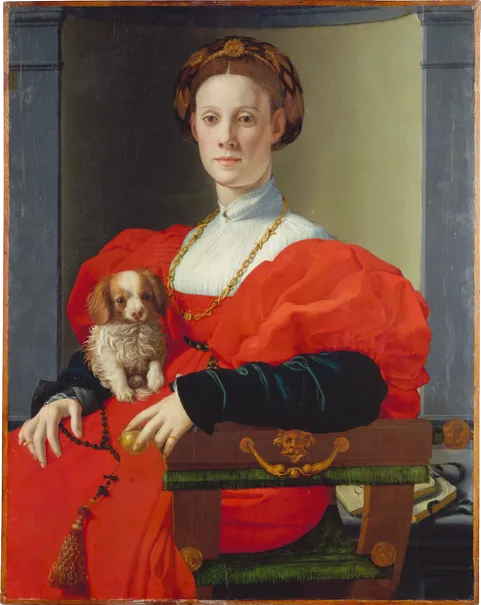
Long before the phrase man’s best friend became common parlance, dogs were already standing beside us in art as in life. In The Dog’s Gaze, the historian Thomas W. Laqueur invites us to explore why they feature more than any other animal in the ways in which we picture ourselves and our stories.
Dogs have been ubiquitous in the worldmaking of visual artists as far back as the Paleolithic age. Looking across the Western tradition, from Giotto to Goya and Rubens to Rego, Laqueur shows what their presence—as hunting partners, beloved friends, and even conduits to the afterlife—reveals about our own ways of seeing and how we want to be remembered. Far from being mere motifs, dogs are an integral and intentional element of the images in which they appear: They provide narrative coherence; they look out and bear witness, often on the artist’s behalf; they illuminate our understanding of morality and melancholy and some, like us, become celebrities. Indeed, as Laqueur reveals, dogs in art are our social doppelgängers, our companions in looking and being.
The Dog’s Gaze is a unique visual history that examines the remarkable social bond between two species, shedding new light on the human condition through the eyes of our canine companions.
Thomas Laqueur is the Helen Fawcett Distinguished Professor of History Emeritus at the University of California, Berkeley. He writes about the cultural history of modern Europe and has published books on topics ranging from working class religion and education during the industrial revolution to the history of the body—Making Sex: Body and Gender from the Greeks to Freud and The Work of the Dead: A Cultural History of Mortal Remains, for example. His most recent book, The Dog’s Gaze: A Visual History (Penguin, 2026), from which this lecture is drawn, appeared in May. Laqueur is a founding editor of the journal Representations and writes regularly for the London Review of Books, The Threepenny Review, as well as for other journals. His work has been translated into twenty languages.
This event is organized by the Maison Francaise with funding from the Eugene Sheffer Distinguished Speaker series, which honors eminent scholars whose work has had an important impact on their field of study. This series was created by the family of Eugene Sheffer to honor his commitment to the Columbia Maison Française, which he directed from 1942 to 1966.
This event is co-sponsored by the Institute for Comparative Literature and Society, the Department of History, and the Department of Art History & Archeology.
Event Details & Important Information
This event is free and open to the public, but please note that registration does not guarantee a seat. We intentionally overbook our events, and seating is first come, first served. We recommend arriving early.
Important: Campus Access Requirements
Columbia’s campus is currently open only to Columbia-affiliated guests (with a valid CUID).
If you do not have a Columbia ID, you will need a QR code to enter campus.
Columbia Public Safety will only issue one QR code per email address. If two or more names are registered on eventbrite using the same e-mail address, only one of them will receive a unique QR code. Please use a different personal e-mail address for each guest.
To receive a QR code:
- You must register on Eventbrite at least 48 hours in advance
- We will submit your name and email to Public Safety
- You will receive an email from [email protected] with your unique QR code
Please check your spam/junk folder if you don’t see the email, and bring a valid photo ID with you to present at campus entry points.