Homes
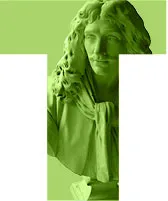
HE ORIGINAL HOME OF THE MAISON FRANÇAISE was a four-story townhouse located at 411 West 117th Street, between Amsterdam Avenue and Morningside Drive. The building, then valued at $30,000, was donated in January 1913 by A. Barton Hepburn. Robert Bacon, Hepburn’s fellow trustee on the France-America Committee and former U.S. Ambasador to France, donated $5,000 for operating expenses. According to President Butler, the opening was delayed for many months, “owing to difficulty in securing the necessary funds” to furnish and equip the house. Thus began the never-ending quest for funding that would punctuate the Maison Française’s 100-year history.
The two upper floors of the house on 117th Street were furbished to provide guest quarters for visiting French professors. The lower floors were used for a growing collection of French books and periodicals, as well as for events and gatherings, with some office space initially reserved for the France-America Society. In 1938, the guest apartment was replaced with a seminar room and a lending library filled with thousands of “French classics, modern works, and other books, pertaining to French studies,” as well as a music library and a phonetics laboratory. The Barnard Bulletin noted, “The atmosphere at the Maison is informal. All furnishings come from France, and visitors are encouraged to speak French, even if they do not speak it well.”
Interior of the original Maison Française townhouse on West 117th Street, during an exhibition of art by Henri Chardon, April 1938
Eugene Sheffer standing in front of the original Maison Française townhouse at 411 West 117th Street
Eugene Sheffer sitting in the original home of the Maison Française on West 117th Street, early 1960s
Plaster bust of Molière, donated to the Maison Française by the French Ministry of Fine Arts in 1918, and the only furnishing that remains from the original townhouse
Students sitting in front of East Hall (later Buell Hall) with Maison Française Director Jacqueline Desrez, late 1970s
Buell Hall (originally called Macy Villa and part of the Bloomingdale Insane Asylum) being moved from its original location on 117th Street to its current location, September 19, 1905
Andrée Viollis speaking at French Resistance and Liberation exhibition, April 16, 1945
Eugene Sheffer outside the original Maison Française townhouse
Director Jacqueline Desrez and visitors in the Maison Française, 113th street location
"The Thinker" and the unifinished International Affairs Building, early 1970s
East Gallery renovation, March 9, 1990
The second-floor vestibule of the Maison Française following its renovation for the Centennial
Seminar room on the second floor of the Maison Française, renovated for the Centennial with funding provided by the Florence Gould Foundation
Maison Française East Gallery Centennial Renovation, funded by LVMH Moët Hennessy Louis Vuitton, Inc., and designed by Caroline Beaupere. Includes custom-made chandeliers by Les Métalliers Champenois, floors by Contour Parquet, woodwork by Urban Art House
Custom-made chandelier for the East Gallery made by Les Métalliers Champenois, with historic glass donated by the Atelier Simon Marc
Buell Hall, home of the Maison Française
"The atmosphere at the Maison is informal. All furnishings come from France, and visitors are encouraged to speak French, even if they do not speak it well."
(continued from above)
In 1966, the Maison’s first home was torn down to make room for the new School of International Affairs. Nothing remains of the original Maison now except for some books and a bust of Molière, one of five copies of works from the Louvre donated by the French Ministry of Fine Arts in 1918. The Maison Française moved temporarily to a house on 113th Street.
In 1975, the university offered a more permanent home to the Maison Française in East Hall, a charming redbrick building centrally located just east of Low Library. Originally built in 1885, East Hall is the oldest building on campus and the only surviving vestige of the Bloomingdale Insane Asylum. Originally called Macy Villa, the building was designed as a residential facility for wealthier male patients, distinct from the more institutional buildings where poorer patients lived.
But the university could not provide funding for the necessary renovations. French Department Chairman Michael Riffaterre and Maison Director Jacqueline Desrez sent out a plea to prospective donors: “Never since its founding in 1913 has the unified action of the Columbia University administration and the vigorous support of the French community been so critical to the future of the Maison Française. The present Maison Française is housed in a substandard building and is inadequately funded. The Maison Française must vacate its present premises and become financially self-sustaining or it cannot continue.” The fundraising drive was successful and the Maison moved into its newly renovated home in 1977, occupying the ground floor with a lounge, exhibition and lecture space, office space, and a dining room. A few years later it expanded to occupy part of the second floor.
After a donor gifted $5 million to the Graduate School of Architecture in the 1980s, East Hall was renamed Buell Hall, and the space in the building was divided anew between the School of Architecture and the Maison Française in a renovation completed in 1991. The footprint of the Maison Française shrank to the space it still occupies today: the East Gallery on the ground floor, the shared use of the two ground floor lobbies, and a suite of rooms on the second floor with a seminar room, a spacious kitchen overlooking the campus, and two large offices.
CENTENNIAL RENOVATION
With support from her Advisory Board, Director Shanny Peer began an ambitious renovation in 2010 to transform the Maison Française into a unique, high-quality showcase for French culture at Columbia in time for its 2013 Centennial. LVMH Moët Hennessy Louis Vuitton Inc. provided generous funding for the renovation, using French and American artisans to create custom-designed elements for the East Gallery. Interior designer Caroline Beaupere designed the look and worked with selected craftsmen. The oak wood flooring was custom-made by Contour Parquet, and Urban Art House created the mahogany-finish stage, podium, and AV cabinet. The French-owned metalworking firm Les Métalliers Champenoiscrafted two ornamental forged-steel chandeliers, with stained glass made by Atelier Simon Marq in Reims, France. Transparent Ghost Chairs designed by Philippe Starck for Kartell—a modern take on 18th-century style—add a whimsical touch to the space. The second floor of the Maison Française was renovated with support from the Florence Gould Foundation, using light oak panel flooring by Contour Parquet, an Art Nouveau color palette, and period antiques.
From the founding gift in 1913 to recent donations by Centennial sponsors, and with the ongoing support of its Advisory Board, the Maison Française survives and thrives today thanks to the generosity of its benefactors.